Static codes are permanent and free. Dynamic codes are flexible and require a plan. For almost every real-estate use, dynamic is the right call — but understanding why makes you a more intentional user of both.
If this distinction is new to you, QR Codes 101 → is the right starting point. This article goes wider and deeper on the trade-offs.
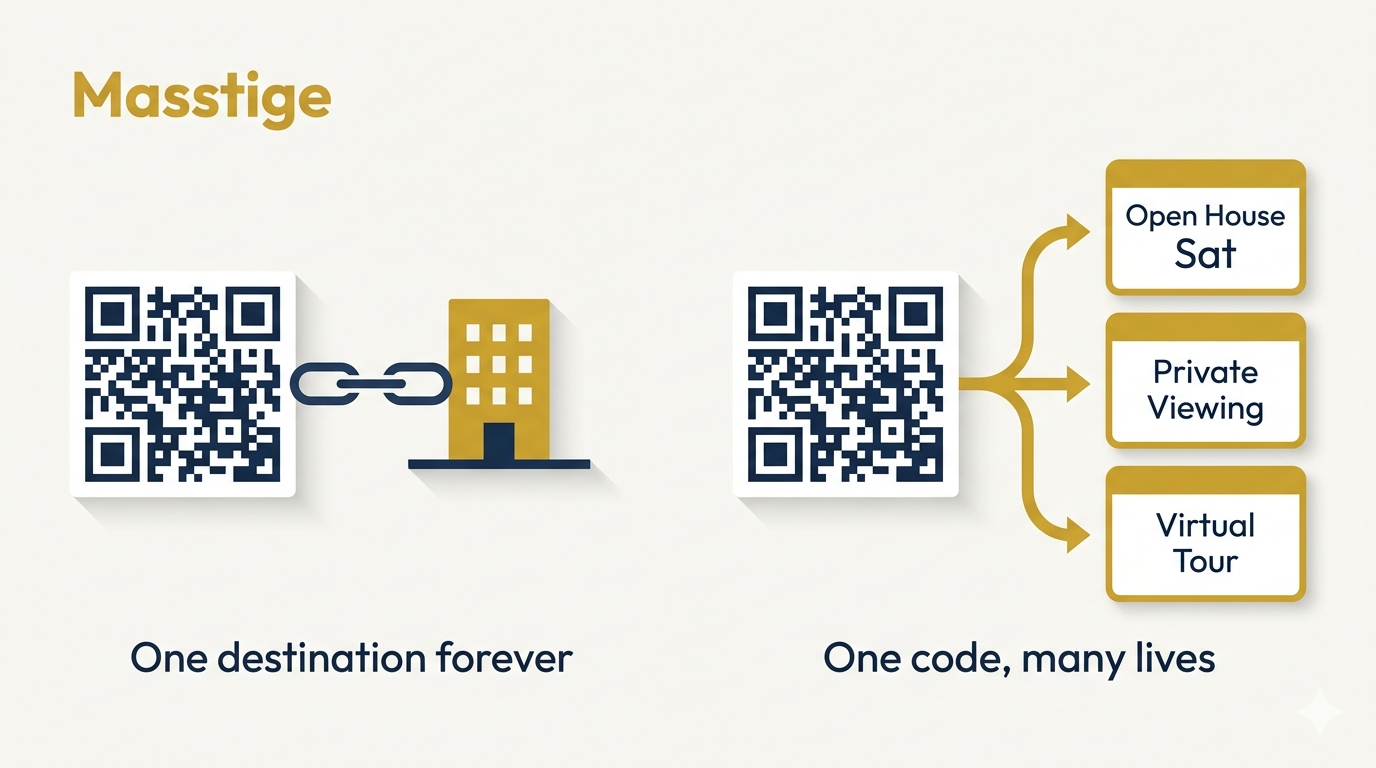
How each type works
A static QR code has your destination URL baked directly into the visual pattern itself. The URL is encoded in the squares and dots — it's part of the physical print. Scan it anywhere, online or offline, and the device resolves the URL directly without any intermediate server. There's nothing to manage because there's nothing in between.
A dynamic QR code encodes a short URL that we control — something like sq.bond/abc123. That short URL is a pointer. When someone scans it, our system looks up where you've told it to redirect, then sends the scanner on to your actual destination. The printed pattern doesn't contain your destination; it contains the address of the instruction to go find it.
The difference sounds subtle. The practical implications are significant.
Real-estate scenarios where each shines
When dynamic is the right choice
Active listing brochures. A listing goes live in January with a virtual tour link. By April it's under offer; by June it's sold. A dynamic code on that brochure can be redirected through each stage — virtual tour, sold announcement, agent portfolio — without printing new material.
Open-house directional signs. The address is on the sign. The QR code can go to a pre-filled registration form, a live-updating floorplan, or a post-visit follow-up page. All from one print run.
Yard signs and building signage. Physical signage stays in place long after a listing changes. With a dynamic code, the sign stays relevant even when the property story changes.
Any context where you want analytics. Dynamic codes give you scan counts, human-vs-bot filtering, and date-range views. Static codes give you nothing — the scan never touches a server you control.
When static works fine
Permanent agency branding. If you want a QR code on your office door that links to your agency's website homepage — and that homepage URL isn't going to change in the next five years — static is perfectly adequate.
Conference badges and event materials. One-day use, single destination, zero need for updates or analytics. Static is simpler and has no ongoing cost.
Branded merchandise. Mugs, notebooks, tote bags — items where the destination is meant to be permanent and reprinting would be the cost of any change anyway.
The honest summary: static works well when the destination is permanent and analytics don't matter. In active property marketing, those conditions rarely apply.
The cost question
Static QR codes can be generated free from dozens of online tools. There's no infrastructure behind them — your destination is in the pattern itself.
Dynamic codes require infrastructure. Every scan hits a server that looks up your redirect, logs the visit, and filters for human activity. That server costs money to run. A SquareBond plan is what pays for that infrastructure — and everything built on top of it: the curated catalog, the dashboard, the analytics, the download formats.
You're not paying for the code. You're paying for the living system behind it.
Go deeper
Why shorter encoded URLs improve scannability
QR codes have a fixed maximum data capacity. A long destination URL encoded directly into a static code requires more modules (the individual squares), which means a denser pattern. Dense patterns are harder to scan at small print sizes, in low light, or on glossy surfaces.
A dynamic code's pattern encodes a short URL — typically 20–30 characters. The resulting pattern is sparser and more scan-tolerant at smaller print sizes. This is one reason dynamic codes can be printed smaller and still scan reliably.
Error correction and why it matters
Every QR code embeds redundancy data so that even a partially damaged or obscured code can still be decoded. Higher error correction levels add more redundancy — which means more modules, which means a denser pattern. SquareBond designs are tested at print-realistic error correction levels to balance resilience against scannability.
Frequently asked questions
Can I convert a static code I already have to a dynamic one?
No. A static code's pattern encodes the destination directly — there's no way to change where it points without generating a new code. If you want a dynamic code, you start fresh with a SquareBond design.
If I cancel my plan, what happens to my dynamic codes?
When a plan expires, the dynamic link behind your code resets. Printed codes will redirect to squarebond.com instead of your configured destination. For codes in long-lived print material, keep your plan active for the duration. See Trials & Subscriptions → for details.
Are dynamic codes slower to scan because of the redirect?
The redirect adds one network round-trip — typically under 30 milliseconds. In practice, it's imperceptible. The code scans the same way; the slight latency is in the page loading, not the scan itself.
Can I mix static and dynamic codes in the same campaign?
You can, but it's unusual. The more common pattern is: SquareBond dynamic codes for listing-specific and campaign materials; static codes for evergreen brand assets that never change destination.
Choosing your QR → has a decision guide if you're weighing specific use cases.